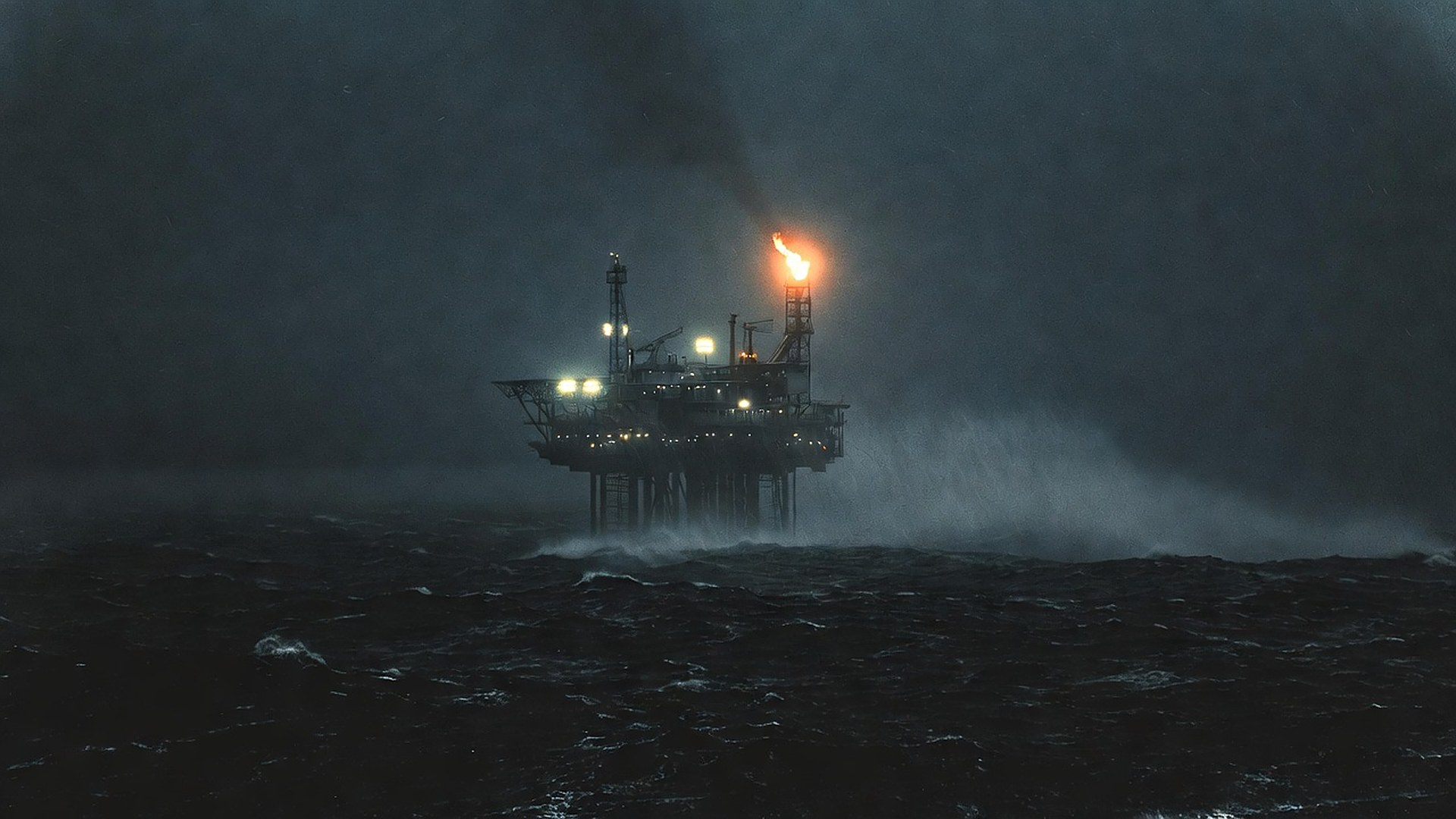
Derrick & drawworks
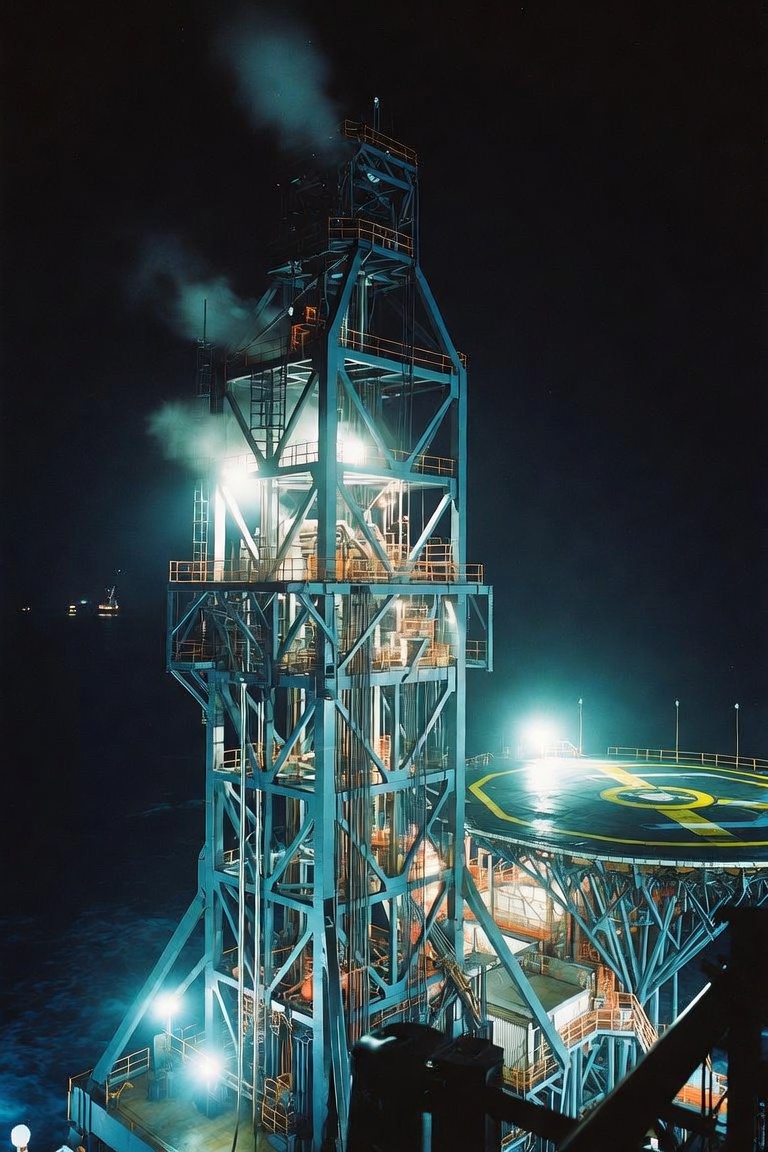
The tower is a hoist. The drawworks winch raises and lowers the entire drill string — kilometres of pipe added and removed one 30-metre stand at a time.
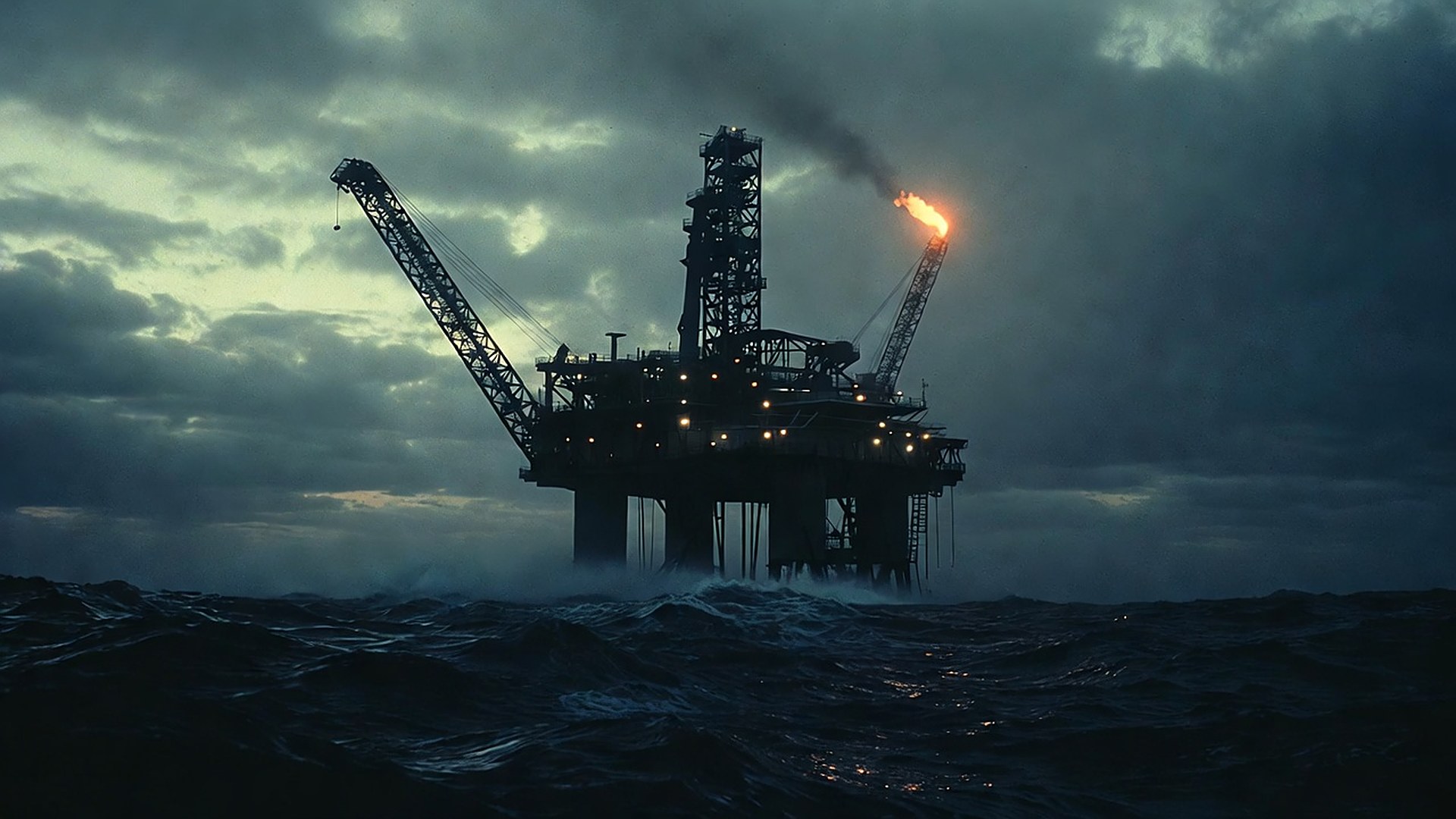
58°17′N 001°04′E · UK CONTINENTAL SHELF
Anatomy of a giant. Scroll to descend
from the derrick to the reservoir — 3,112 metres straight down.
FIELD MANIFEST
This is how it works, top to bottom. Keep scrolling — the depth gauge in the corner is yours.
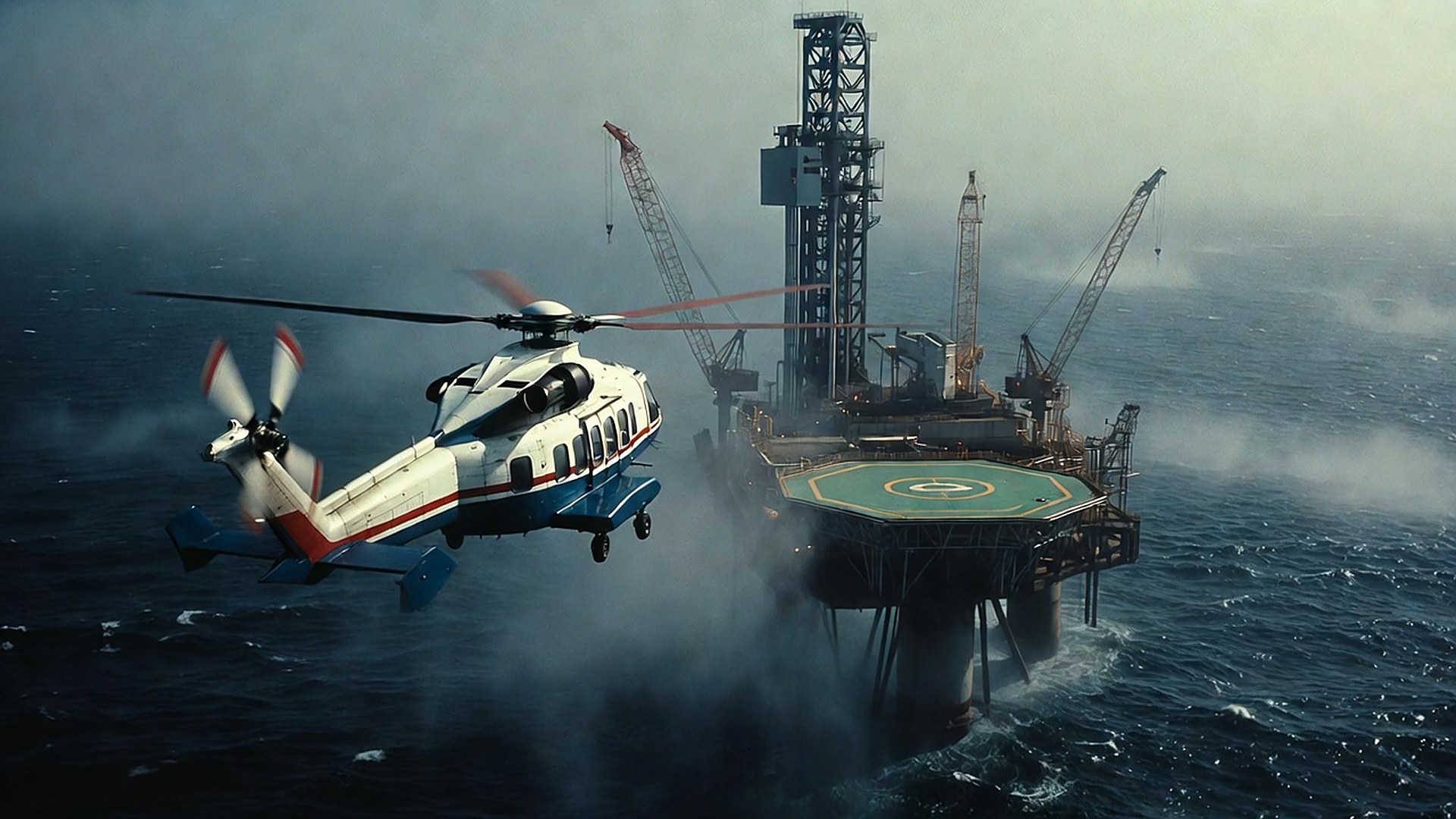
Every fortnight, 190 people trade solid ground
for a postcode that moves in the swell.
TOPSIDES22,400 tonnes of engineered steel, lifted into place in modules the size of apartment blocks.
DERRICKThe drilling tower stands 52 metres above deck — the height of a seventeen-storey building.
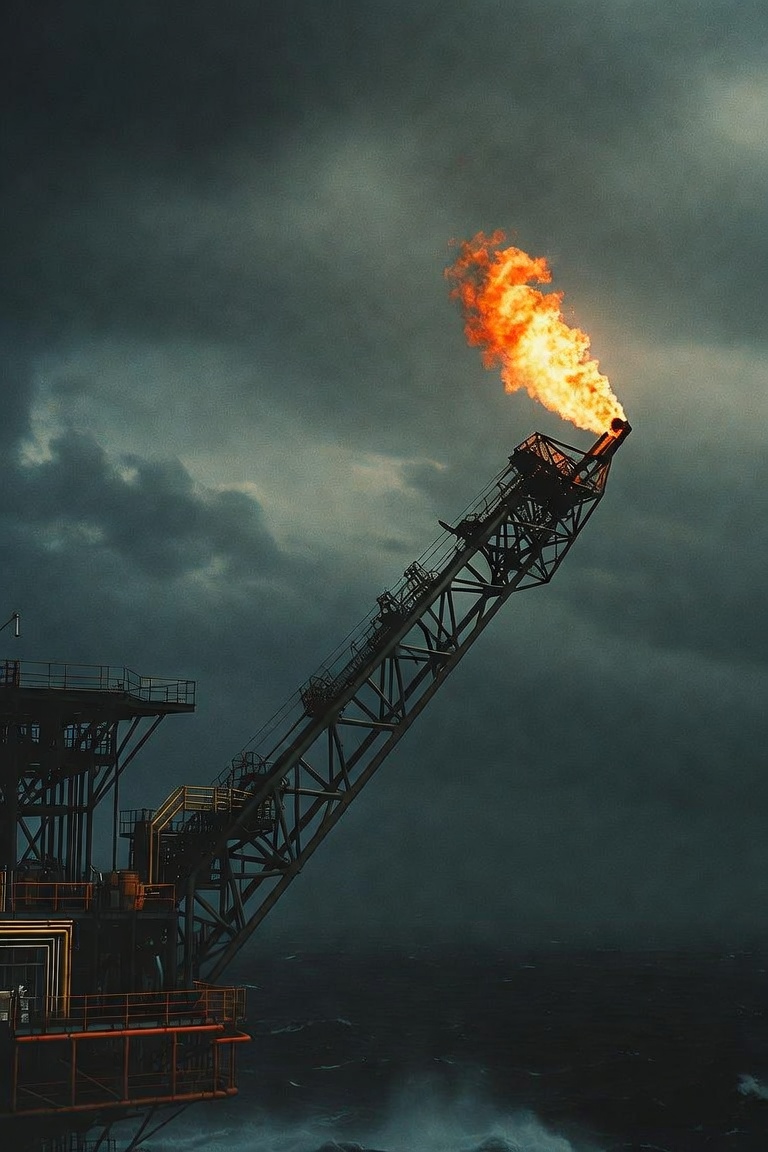
FLAREThe flame is not waste for show — it is a controlled pressure release, burning day and night.
STATIONHome to 190 crew, 160 km from the nearest landfall.
TECHNICAL FILE
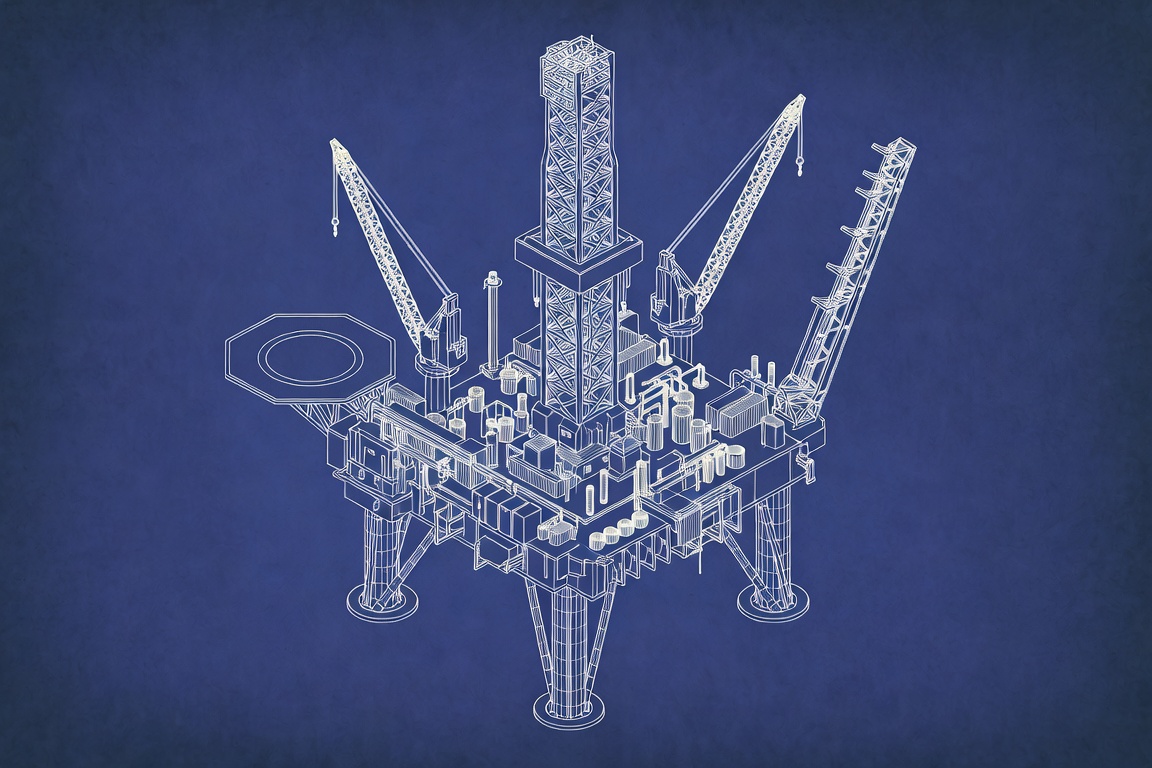
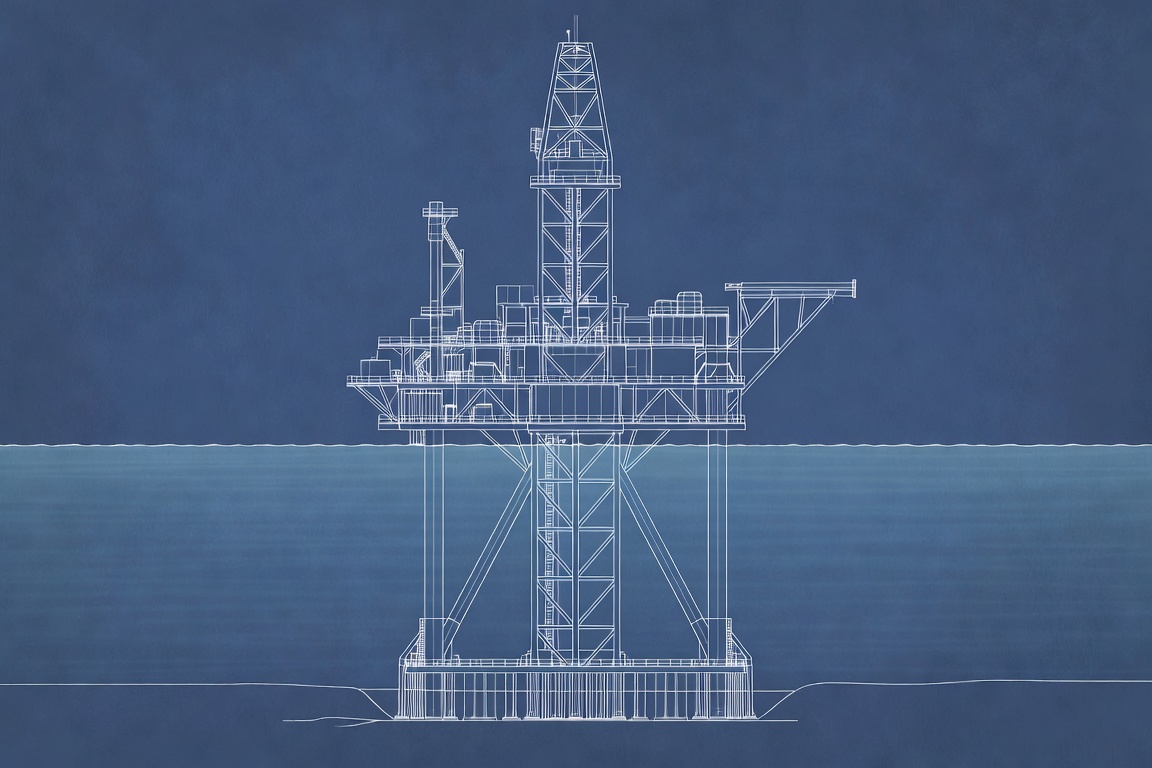
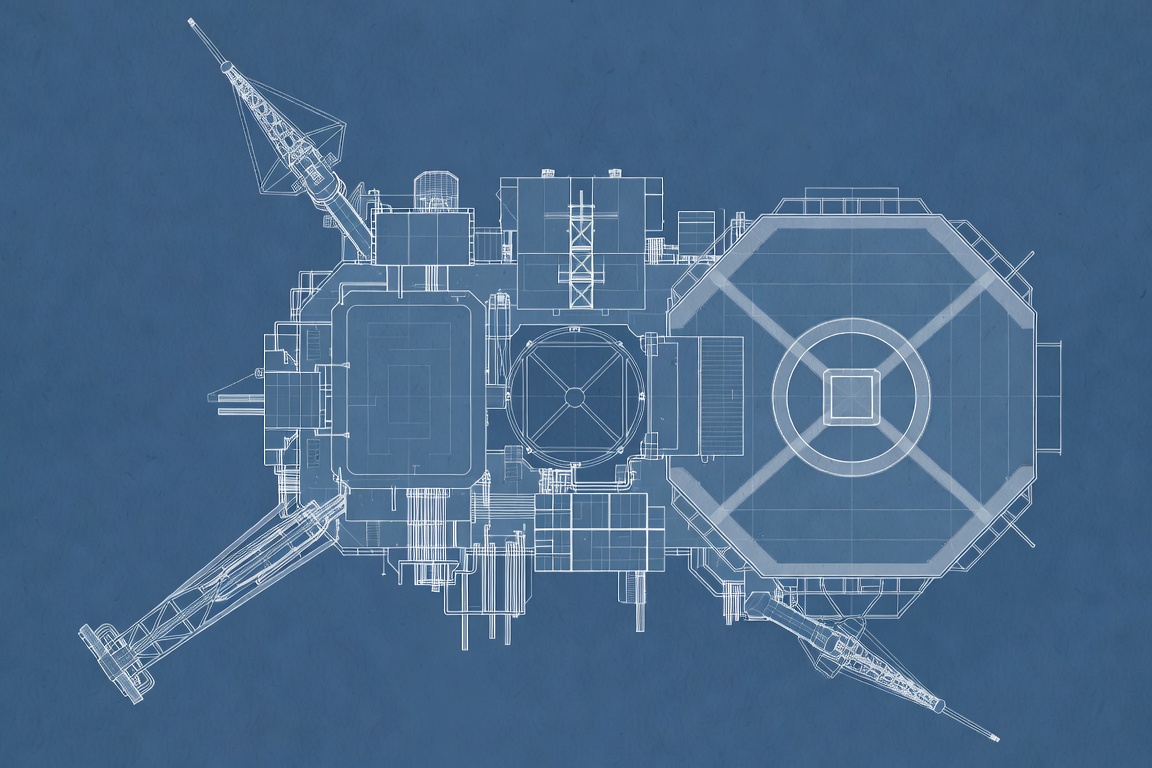
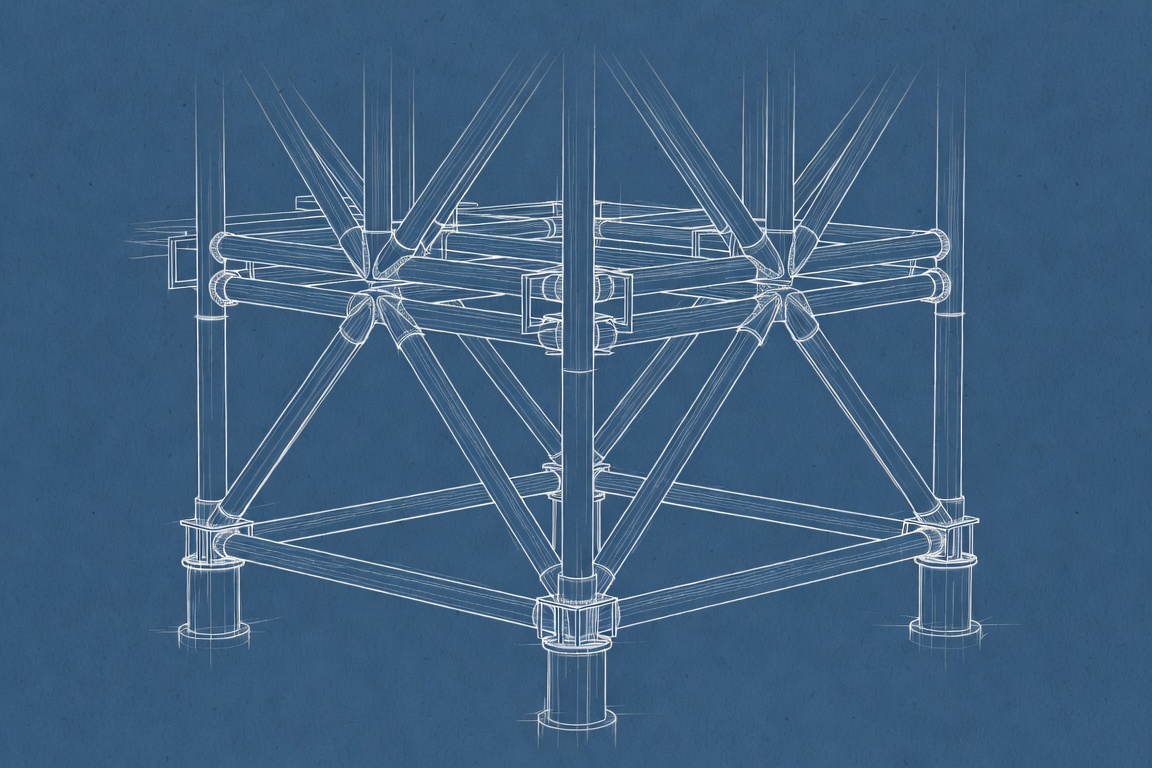
Before a single weld, ATLAS-9 existed on paper. Four plates from the design file — keep scrolling to leaf through them.
SCROLL →
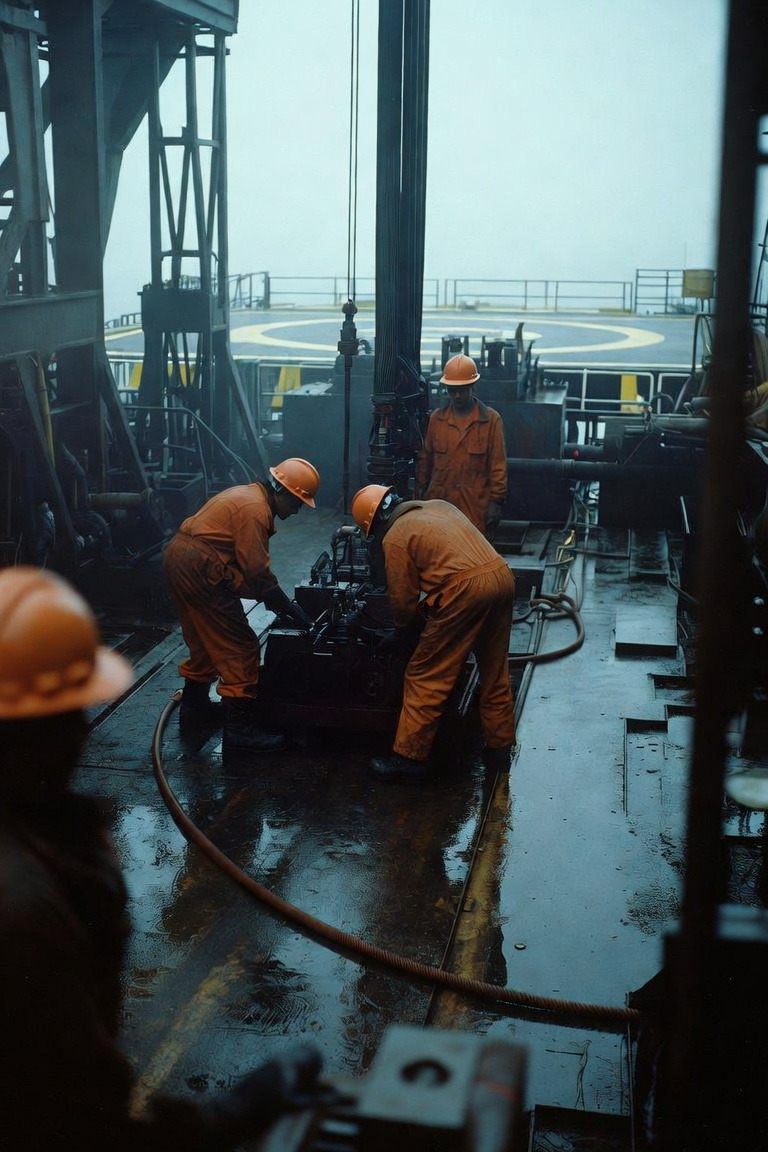
DRILL FLOORThe loudest room at sea. Pipe is added thirty metres at a time — a rhythm crews call tripping.
IRON ROUGHNECKHydraulic arms make and break pipe connections. Human hands never touch spinning steel.
MUD PUMPSDrilling fluid is driven three kilometres down the string and back, carrying rock cuttings home.
CONTROLOne room, one eye on every valve, pressure and person aboard.
ON DECK
−2 MBelow the splash zone, the light goes green, then grey, then gone.
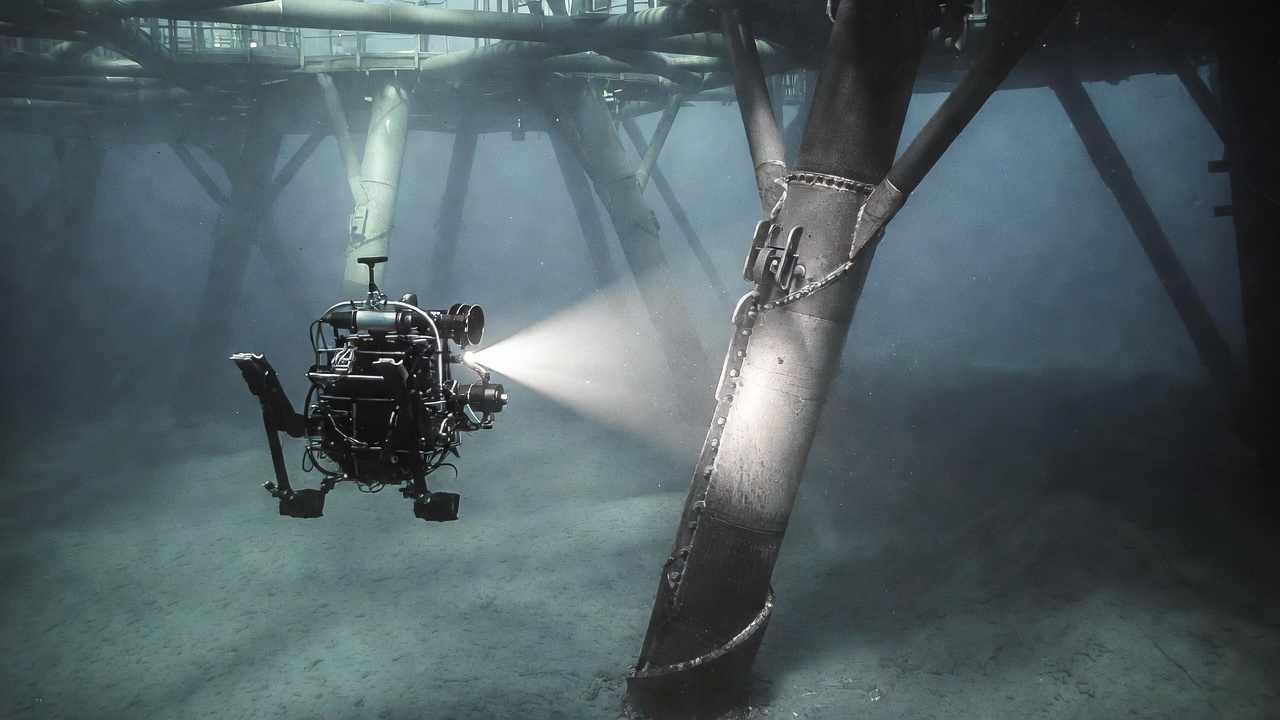
JACKETA welded steel lattice, pinned to the seabed with piles — engineered for the hundred-year wave.
−90 MSacrificial anodes corrode so the structure doesn't. ROVs patrol where divers can't.
−140 MThe seabed. And this is only the beginning of the journey down.
BITTungsten-carbide teeth chew through rock under tonnes of weight and punishing torque.
MUDEngineered fluid cools the bit, balances formation pressure, and lifts cuttings to surface.
CASINGBehind the bit, telescoping steel casings are cemented in — sealing every metre gained.
TARGETA reservoir of porous rock, 3,048 metres beneath the seabed. Not a lake — a sponge under pressure.
SYSTEM CUTAWAY
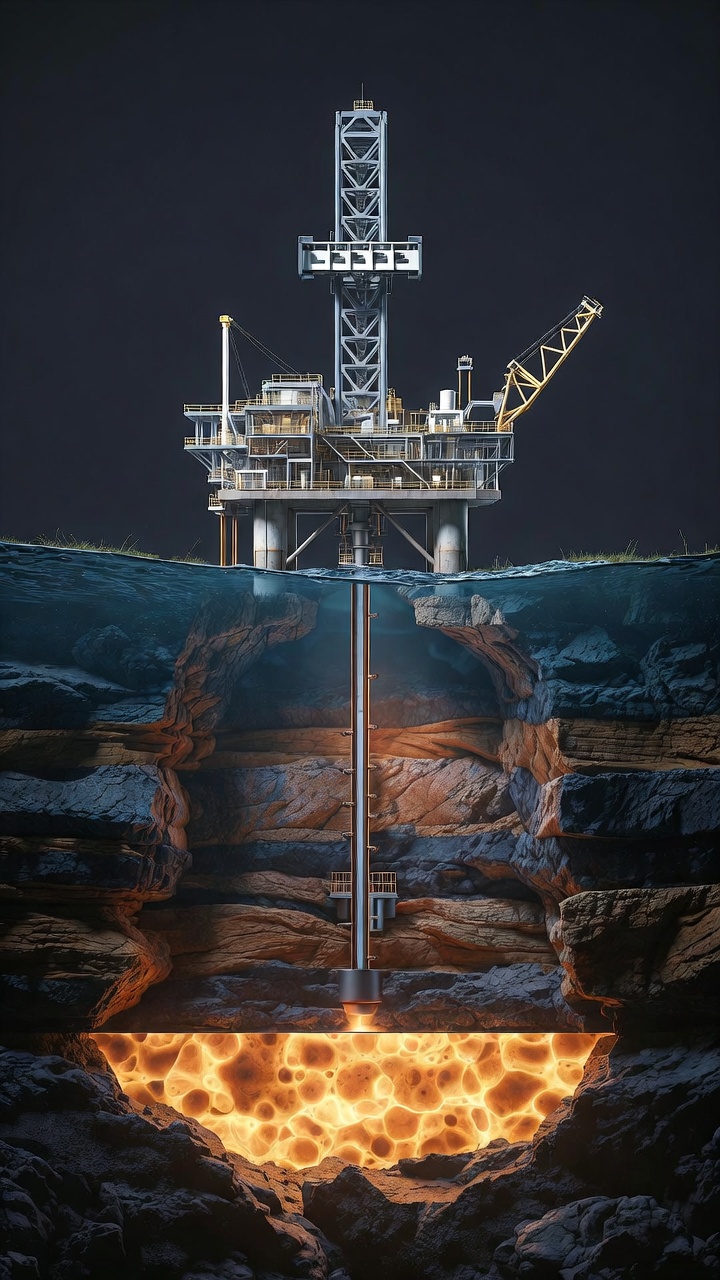
The tower is a hoist. The drawworks winch raises and lowers the entire drill string — kilometres of pipe added and removed one 30-metre stand at a time.
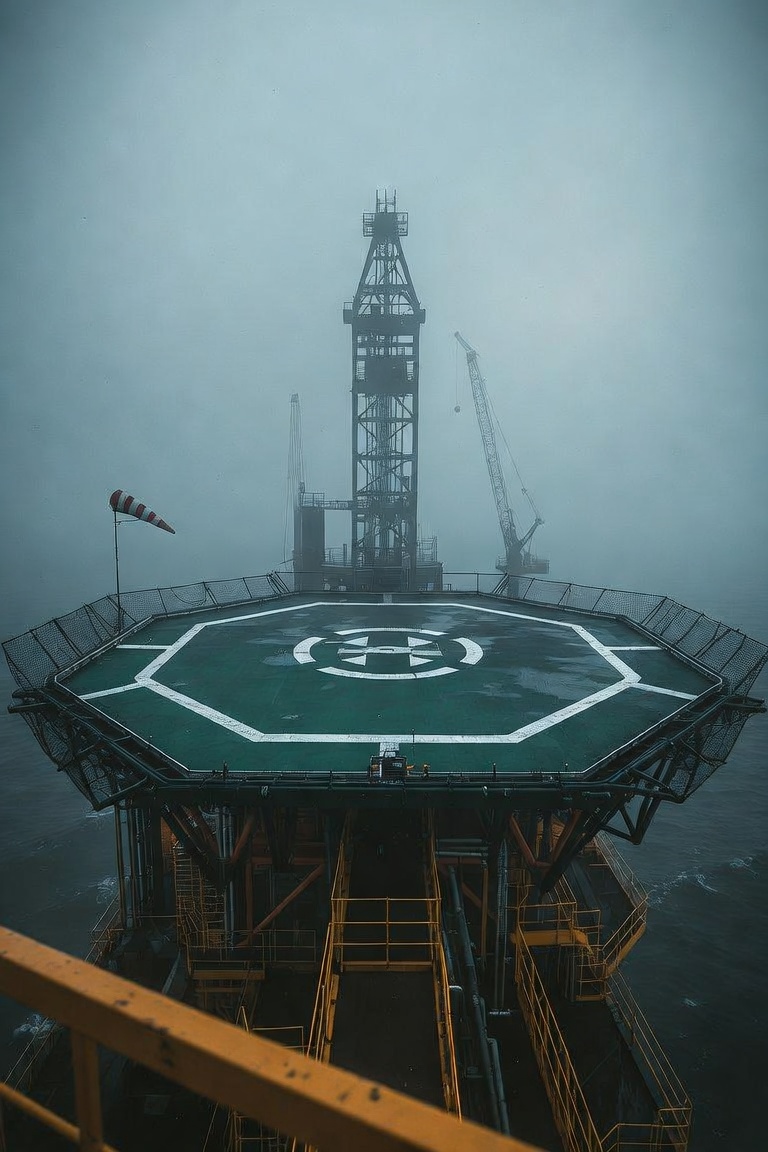
Everything above the waterline: power generation, processing plant that separates oil, gas and water, accommodation, helideck, cranes and the flare.
A welded steel lattice standing on the seabed, fixed with driven piles. It carries the whole platform and is designed against the hundred-year storm.
The conduit between platform and seabed. Drill pipe, fluids and produced hydrocarbons all travel this vertical corridor through open water.
The last line of defence. A stack of hydraulic rams that can seal the well — or shear the drill pipe clean through — in seconds if pressure runs away.
Telescoping steel casings are cemented in behind the bit, sealing the bore from the rock. Three kilometres down sits the target: porous rock holding oil under pressure — a sponge, not a lake.
WHAT IT TAKES
Two or three weeks on, the same off. Twelve-hour shifts, day and night crews, 365 days a year.
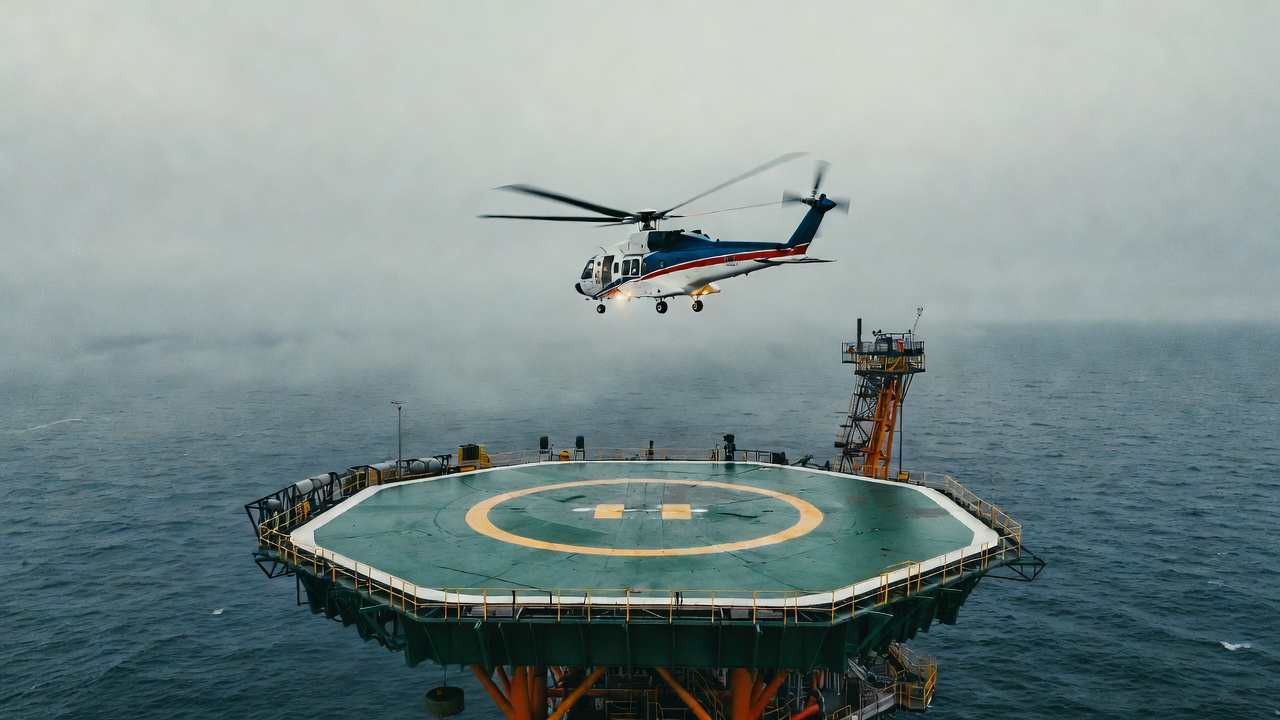
The commute is a Sikorsky S-92 over open water. Every passenger trains to escape a submerged, inverted cabin.
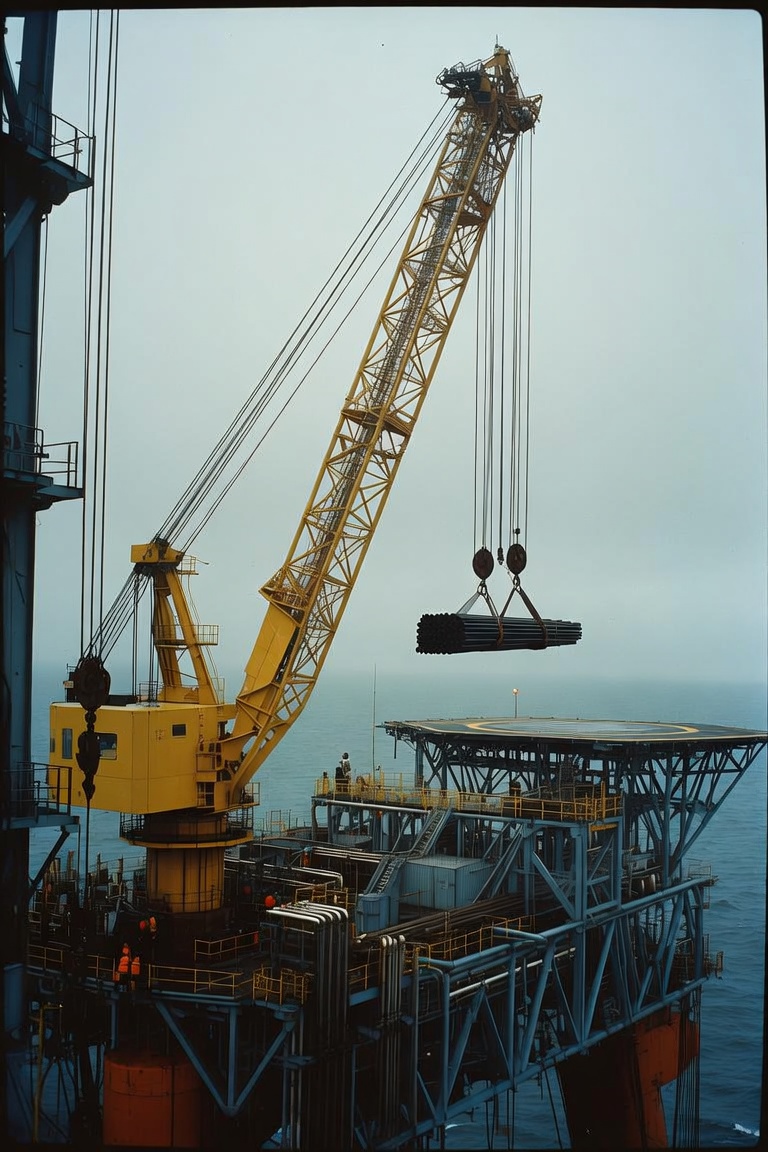
Pipe, chemicals, food and fuel arrive by ship and are craned aboard in seas that would close most harbours.
Remotely operated vehicles inspect welds, anodes and pipelines on the seabed — the platform's eyes underwater.
One medic, a telemedicine link to shore, and a galley that never closes. The nearest hospital is an hour's flight away.
Gas turbines generate enough electricity for a small town — because out here, there is no grid to lean on.
EARTHAround 12,000 offshore installations stand in the world's oceans tonight.
ASSEMBLYEvery one was built at sea — lifted, welded and pinned together piece by piece.
DRILLINGEvery one drills far below the light, exactly the way you've just descended.
SCALEATLAS-9 is one giant among thousands. The sea is full of them.
RISK REGISTER
06 · 07 · 1988 — PIPER ALPHA
On the night of 6 July 1988, a condensate pump on the Piper Alpha platform was restarted while a pressure safety valve was missing — a paperwork failure in the permit-to-work system. The leak ignited. Within twenty-two minutes the gas risers ruptured, and the platform was lost. 167 men died. It remains the world's worst offshore disaster.
The Cullen Inquiry that followed rewrote the industry: 106 recommendations, a new safety-case regime, and a simple principle — every installation must prove, in advance, how it will keep its people alive.
VISUAL LOG
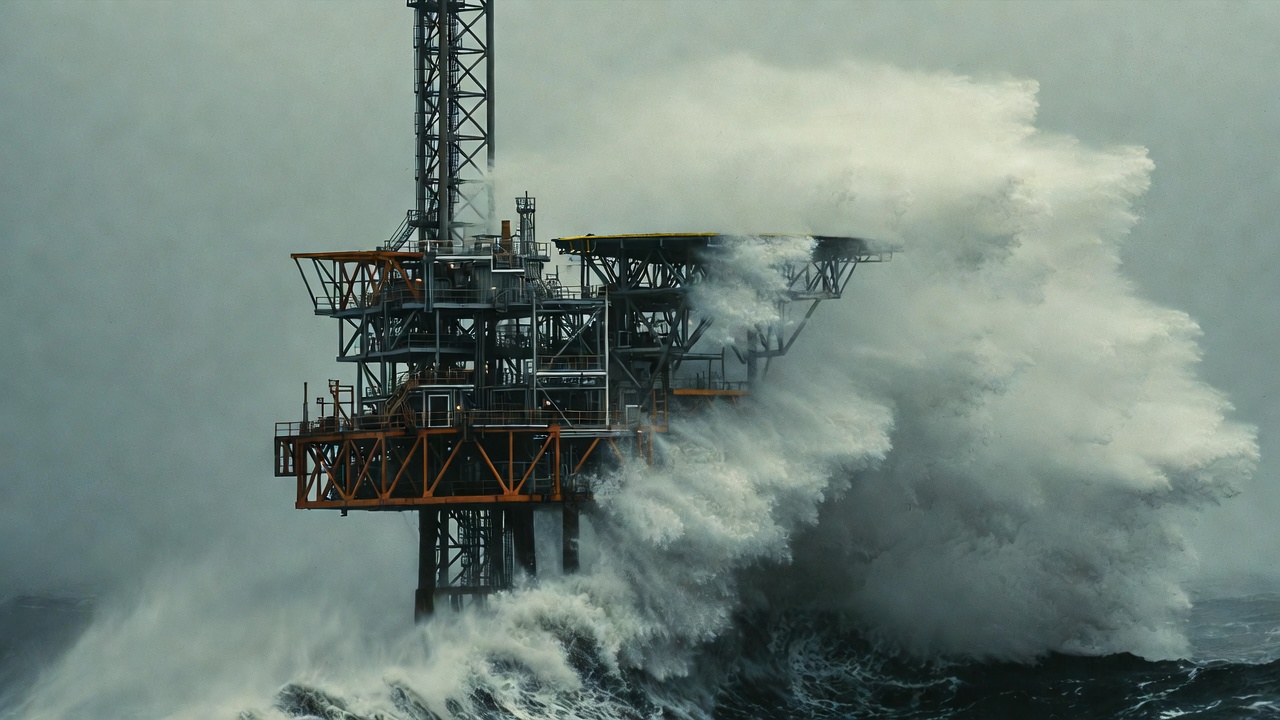
OPEN WATER
Which is why everything out here is built as if it does.
MOVE YOUR CURSOR — THE WATER ANSWERS